
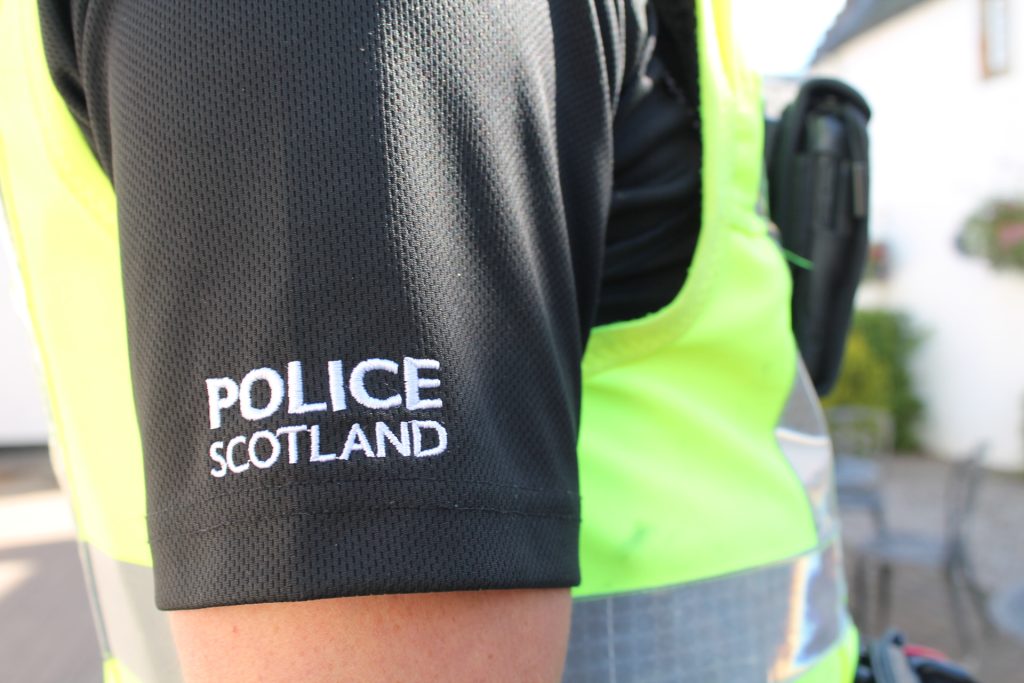
ASPS President Rob Hay reveals a disappointing lack of understanding by Scottish politicians about the reality of policing, as they met officers ahead of elections in May.
Yesterday, I was in Edinburgh as an invited guest for the Scottish Police Federation’s ‘Policing Manifesto’ event. Essentially a political ‘round-table’ type event, it sought to bring representatives of Scotland’s main political parties together to allow them to set out their stalls, in terms of their vision and commitments for policing in Scotland.
As the Holyrood elections in May are fast approaching, you might think that the 20,000 votes of the staff of the second-largest public sector employer in Scotland (and potentially the votes of their families, too) would be a compelling prize for our political classes to compete for. The fact that they were 30 minutes late, due to business at the Criminal Justice Committee, didn’t augur well, with the exception of the Reform representative, who failed to materialise entirely, apparently due to “a diary cock-up”. Oh well…
David Kennedy, SPF General Secretary, open the event with a shortened speech, bringing into sharp relief the current and impending challenges facing policing in Scotland. What then followed was 40 minutes of roundly uninspiring rhetoric that failed to reveal any firm commitments to support for a service increasingly in crisis. There was broad agreement that ‘something must be done’ about officer safety for example, but no clear suggestion on what that might be.
Given the headline-grabbing ask of the SPF for more ready access to firearms, this was going to be a hot topic, but the failure across the board to recognise the reality of more than 7,000 assaults on officers annually means the point was being missed. With falling police numbers on the frontline, cops don’t feel safe. Even talks of a universal roll-out of Taser as a halfway house met with a lukewarm response. Questioning from the audience suggested that refusing cops Taser was like refusing hard-hats to construction workers until you’d seen enough broken skulls, made the point succinctly. Somewhat surprisingly, the Green party representative, Lorna Slater, showed the best understanding of the evidence around Taser.
Discussion on the ailing criminal justice system failed to suggest any alternative to the current revolving door policy, seeing criminals returned to communities early (soon with having served only 30% of their actual court sentence). The prevailing view, with Sharon Dowey of the Scottish Conservatives as the lone dissenting voice, was that short term sentencing didn’t work and community sentencing was the alternative. Given that there is a legislative presumption of liberty, and that sentences under one year have been abolished for some time, during which time prisoner numbers have reached record levels, the practical experience of these policies and their outcomes suggest that some change is necessary. Another question from the audience exposed the panel’s lack of understanding about what community sentences comprised of. The example provided was of sticking diamantes onto greetings cards. It is not entirely clear about the rehabilitative effect of this activity, and I am not sure how appropriate victims of crime would find this outcome.
Questions from the audience had to be cut short, so I missed the chance to ask the panel, who had all parroted the importance of community policing, when the last time any of them had seen a police officer on foot patrol in their local area.
The session was closed by SPF Chair, David Threagold, who took the opportunity to hammer home the point regarding the extent to which policing is over-committed doing the work of other agencies in the Mental Health space. This point, if nothing else, represents the greatest opportunity to redirect police resource to core tasks in pursuit of the Chief’s ‘2030 Vision’. This is more contingent on moral courage by police leadership in shaping the policy environment to allow for more appropriate operational decision-making, than it is on political support. It will push demand elsewhere, therefore being unpopular with some public-sector partners and politically unpalatable. Whether or not it comes to pass, or whether the expectation is that beleaguered police officers will continue to try to be all things to all people remains to be seen.
So,in summary: there were no commitments on police budget, police numbers or equipment; and no “exclusives” on impending manifesto promises. Those 20,000 Scottish policing families may feel that it is less ‘who’s best for policing’ than who is the least worst option.